
Safeguarding the Communication Rights of Minimally- and Non-Speaking Individuals
In relation to Facilitated Communication and Rapid Prompting Method / Spellers Method
About
Growing numbers of minimally- and non-speaking people are being subjected to Facilitated Communication and Rapid Prompting Method / Spellers Method.
In this webinar, you will learn about
- the history and features of these techniques, and reasons for their growing popularity
- the populations most vulnerable to having their communication rights violated using Facilitated Communication or Rapid Prompting (Spellers Method)
- how to recognise if Facilitated Communication and variants are being used
- how authorship is checked, and actions to take to improve access to communication rights.
- ways to safeguard the communication rights of minimally- or non-speaking people
Implications for people providing assistance for minimally- or non-speaking people to communicate will be discussed in relation to the ASID Position Statement on Facilitated Communication and Rapid Prompting Method.
This webinar will be one hour of presentation and 30 minutes of discussion and questions.
Presenters
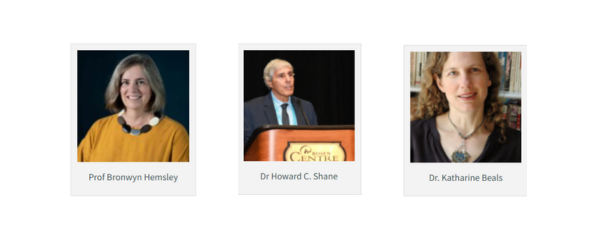
Prof Bronwyn Hemsley is the Head of Speech Pathology at the University of Technology Sydney. She is a Certified
Practising Speech Pathologist with 37 years clinical experience and with no commercial interests in any augmentative and alternative communication methods or technologies. She is a Fellow of Speech Pathology Australia and of the International Society for Augmentative and Alternative Communication.
This webinar also features co-presentation from Dr Howard C. Shane, Director of the Autism Language Program of Boston Children’s Hospital and Dr. Katharine Beals of the University of Pennsylvania and Autism program at Drexel University; both of whom have provided expert witness testimony in legal cases involving the use of Facilitated Communication and Rapid Prompting (Spellers) Method.
Accessibility
The event is a webinar. Some people might like support to get on-line and to make the technology work.
The webinar will be recorded. Some people might like to watch the webinar again later. This can help with understanding the information.
This webinar is designed for researchers, co-design researchers, advocates and self advocates, peer leaders, managers & case managers, therapists, procurement and comms teams, businesses and agencies building their access and inclusion knowledge, govt depts, disability and community services, families.
